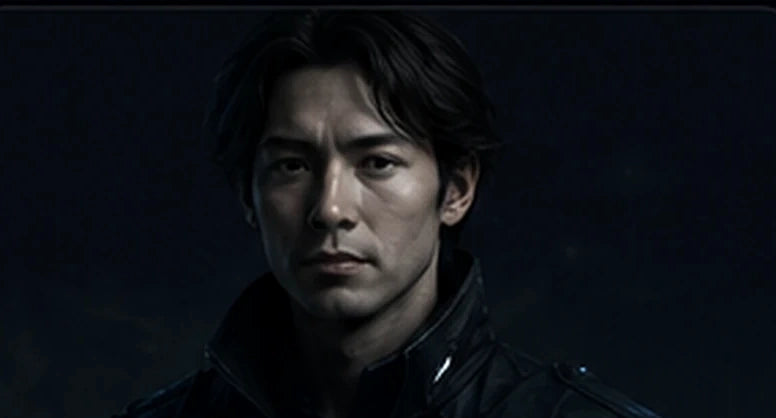
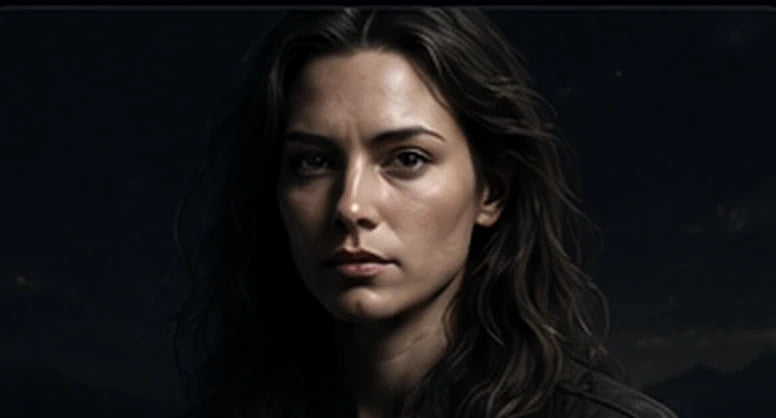
She entered sideways, pushing past him with the desperation of someone escaping a burning room. Nova shut the door and turned the key.
“Back,” she said.
“What?”
“Get away from the glass.”
She grabbed his shirt and pulled him into the narrow passage beside the stairs. Outside, pale beams swept over the front windows. The black car idled without engine noise.
Nova raised the lamp. “Who are you?”
The woman pressed a finger to her lips.
Footsteps approached through the rain.
Not hurried. Not cautious. Three people walking with the certainty that every door would eventually open for them.
The letterbox lifted.
A line of darkness appeared.
Nova saw no fingers.
Something inhaled on the other side.
The woman closed her eyes. Her lips moved silently, counting.
The person outside spoke.
“Mr Mercer?”
A man's voice: calm, educated, official.
Nova looked at the woman. She shook her head.
“Mr Mercer, we need to confirm that you're safe. There has been a local electrical disturbance.”
The letterbox remained open.
Nova's heart beat so hard he was certain they could hear it.
“We know you're awake.”
The woman raised three fingers.
Two.
One.
Every light in the house came on at once.
The television in the living room began playing to an empty sofa. The kettle clicked on. Upstairs, Nova's alarm sounded. His laptop chimed. A dozen devices woke together, filling the house with ordinary noise.
Outside, the man said, “There. That's better.”
The footsteps retreated.
Nova waited until the black car rolled away. Through the gap beside the curtain, he saw its registration plate change twice before it reached the corner.
He turned on the woman.
“Start talking.”
She was shivering now. Up close she looked exhausted. There was dried blood beneath one ear and scratches across her bare feet.
“My name is Kai Arlen.”
“Kai?”
“Yes.”
“You said I told you not to trust me.”
“You did.”
“I've never seen you before.”
“I know.”
“That doesn't make sense.”
“Truth rarely does anymore.”
Nova held the lamp between them. “Who were those people?”
Kai glanced towards the front door. “They call themselves Custodians. Sometimes.”
“Sometimes?”
“The name changes. The people don't.”
“Police?”
“No.”
“Government?”
“Older.”
She walked into the kitchen as though she knew the house and opened the cupboard above the sink. Nova had to suppress the absurd irritation of seeing a stranger choose the correct cupboard for the glasses on her first attempt.
She filled one with water.
“How did you know those were there?”
Kai stopped.
For a fraction of a second, uncertainty crossed her face. “Lucky guess.”
“You've been here.”
“No.”
“You knew where I lived. You knew my name. You knew the lights would come back.”
“The lights always come back at 4:22.”
Nova checked the oven clock.
4:22.
Kai drank the entire glass. Her hand shook against the rim.
He placed the lamp on the counter but did not move away from it. “What happened outside?”
“The Moon moved.”
The words emptied the room.
Nova looked towards the window.
Kai watched him carefully. “You saw it.”
“No.”
“Your nose is bleeding.”
He wiped it again and found fresh red on his fingers.
“You saw the line open,” she said. “You heard the Channel.”
“How could you know that?”
“Because I did too.”
Gold stirred in her irises.
Nova's fear shifted. It did not lessen; it became more precise.
Kai placed the photograph on the table. It was an instant print, the sort with a white border. The image showed Nova and Kai standing beneath a concrete archway covered in unfamiliar symbols. They looked filthy and exhausted. Nova had a black mark running from his left eye to his jaw. Kai's red coat was torn at the shoulder.
Between them stood a third person whose face had been scratched away.
On the white strip beneath the image, someone had written:
DON'T LET NOVA OPEN THE DOOR.
Nova picked it up.
The handwriting was his.
He knew the pressure of the pen, the odd way he flattened the top of a capital D. But the photograph showed a version of him perhaps five years older.
“This is fake.”
“I watched it develop.”
“When?”
“Tomorrow.”
He gave a short laugh, but Kai did not.
She sat at the table. “At 4:17, reality changed. Not all of it. Think of it as a document being edited while people are still reading. Most minds update with the new version. They don't notice what's been removed.”
“And you do?”
“We do.”
“Because of our eyes?”
Kai nodded. “The gold is a marker. Or a key. I don't know.”
Nova looked again at the photograph. “You said this developed tomorrow.”
“In one version of tomorrow.”
“Stop saying things like that.”
“I would love to.”
She pulled up her sleeve. A series of numbers had been written along her forearm in black ink.
4:17
4:22
6:03
9:40
13:11
00:00
Some were crossed out. Beside 6:03 she had written STATION. Beside 9:40: HE FORGETS.
“What is that?”
“Anchor points. Times that survive between versions.”
“Versions of what?”
“The day.”
Nova stared at her.
Kai's expression hardened. “At midnight, the Moon moved. At 4:17, you woke. At 4:22, the Custodians checked the house. At 6:03, we go to Blackfriars Station. At 9:40, you forget me.”
“I don't know you.”
“Not yet.”
“And what happens at midnight?”
She looked towards the ceiling, as though she could see through it to the Moon.
“The day ends.”
“Days normally do.”
“This one restarts.”
Silence returned, though now it was filled with the refrigerator's hum and the ticking clock.
Nova placed the photograph down. “You're saying we're trapped in a loop?”
“No. Loops repeat.”
“What's the difference?”
“This day is learning.”
Something thudded upstairs.
Nova spun towards the hallway.
A second thud. Then the slow creak of a floorboard above them.
Kai stood.
“You said you lived alone.”
“I do.”
She took a knife from the wooden block on the counter.
The footsteps crossed Nova's bedroom.
He reached for the lamp again.
Kai looked at the kitchen clock.
4:24.
Her face lost its remaining colour.
“They've never come inside this early.”
“Who?”
She turned the knife in her hand and pointed the blade towards the dark hallway.
“You.”